

Contents
In the past few years, web design has been transformed by a number of trends. Some of them have evolved into timeless classics, while others have fallen out of favor as quickly as they appeared. What are some of the trends from 2023 that will still be relevant in 2024? Let’s explore some of the most popular graphic design trends for this upcoming year!
Dark mode
Many users find that dark mode is easier to read, so you may want to consider using it in order to increase your conversion rate. It’s also a great way to make your website stand out from the crowd, with many sites in this space already using dark mode.
3D illustration
If you want to add depth to your design, 3D illustration could be the tool for you. 3D illustrations can be used for more than just logos. They can also be used to create a sense of movement and even depth.
How? Let’s use an example: a logo with a ball on it. In this case, the ball is moving upwards towards the viewer, which gives us an impression of speed and action (which may not be intentional). However, if we were to change the perspective so that our eyes are looking down at that same ball—as though we were seeing it through glass or water—we now have an image that feels more weighty, as though it has substance and dimensionality.
This effect doesn’t just apply to imagery; designers are also using this technology when creating text-heavy designs such as infographics or websites where there isn’t much motion happening beyond scrolling through pages of content
Asymmetrical layouts
Asymmetrical layouts can create a sense of balance and order. They can also create visual interest as they are not symmetrical and work well in compositions where the viewer’s eye is drawn to one side or another.
For example, in an asymmetrical layout you may choose to place text on one side of the page while images are placed on another side. This will make it easier for your users to read through your content without having everything cluttered together on one side of the screen.
Interactive elements
Interactive elements are a popular trend in web design. They can help bring your site to life and engage visitors, but they also have their drawbacks.
One of the best ways to use interactive elements is through video features like playlists or tours. These are becoming increasingly popular on sites like YouTube and Netflix, so why not try them out on your own website? However, if you’re looking for something more subtle than these full-blown videos, you could add an interactive element like a map or timeline that uses hover effects to show more info about what’s being displayed.
Video backgrounds and overlays
Video backgrounds and overlays are becoming more popular, and for good reason. Videos can create a more immersive experience for your customers and help them understand the value of your product or service. With video backgrounds, you can highlight a specific section of your page to draw attention to it. For example, if you have a product-focused website that wants to explain how its products work, using a video background would be helpful since it allows users to see exactly what they’re buying without having to read an extensive description. In addition, overlays allow you to highlight a call-to-action (CTA) or submission form while still maintaining an engaging aesthetic with smooth transitions between screens.
Split screen blocks
Split screen blocks are an interesting design choice for web pages. They’re used to show two different elements, usually one on top and one on bottom. The split screen block can be used in a bunch of different ways, but it’s best when you have a lot of information to show—for example, if you want to explain how a product works or how people can use it.
The “split” is where the name comes from: you’re splitting up your page into two halves that show different things in each half.
Complex grid layouts
A grid layout is a series of columns and rows that establish a structure for the design. It’s most useful when creating a website or app because it allows you to quickly organise content on the page, but it can also be used for other projects like logos, posters, flyers and more.
The best part about this tool is that it allows you to create beautiful designs based on your own preferences and preferences of others around you. This way there are no limitations as long as they are within certain constraints such as aesthetics or usability requirements (e.g., not too many columns per row).
Colour gradients
Colour gradients are one of the most popular web design trends right now. They can be used to create a sense of depth, or as a way to create a smooth transition between two colours. The pattern isn’t limited to backgrounds and headers, it can also be used in buttons, navigation bars and footers.
When creating a colour gradient with CSS3 or HTML5, you don’t need to specify where each colour begins or ends – because these gradients are created using blending functions like “linear”, “radial” or “repeating-radial” that interpolate an image into another image with different colors.
Playful typography
Playful typography is a trend that is becoming more popular. Playful typography can be used to create a playful and fun look, and it is used in logos, headers, and body text. It uses unusual typefaces colours and effects to create an engaging experience for the user or customer.

AI-powered chatbots.
Chatbots are becoming increasingly common in online businesses. They allow customers to interact with an automated system instead of having to talk to a human being. These systems are able to answer questions, provide customer service, and perform other tasks.
Augmented reality.
AR technology has been used by companies such as Google and Facebook to enhance user experiences. It allows users to view real world objects through a virtual overlay. This type of technology is expected to become even more prevalent in the future.
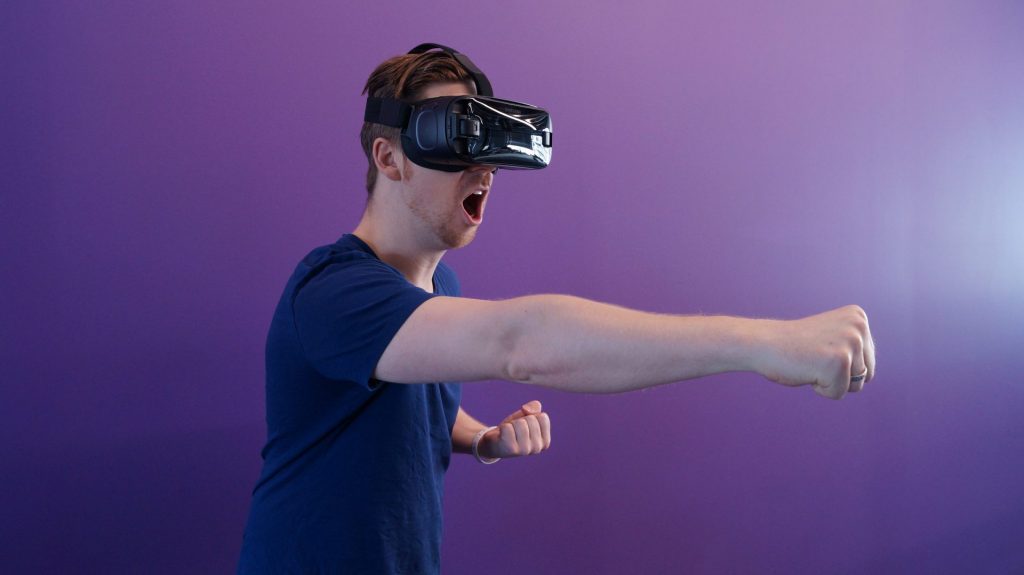
Virtual reality.
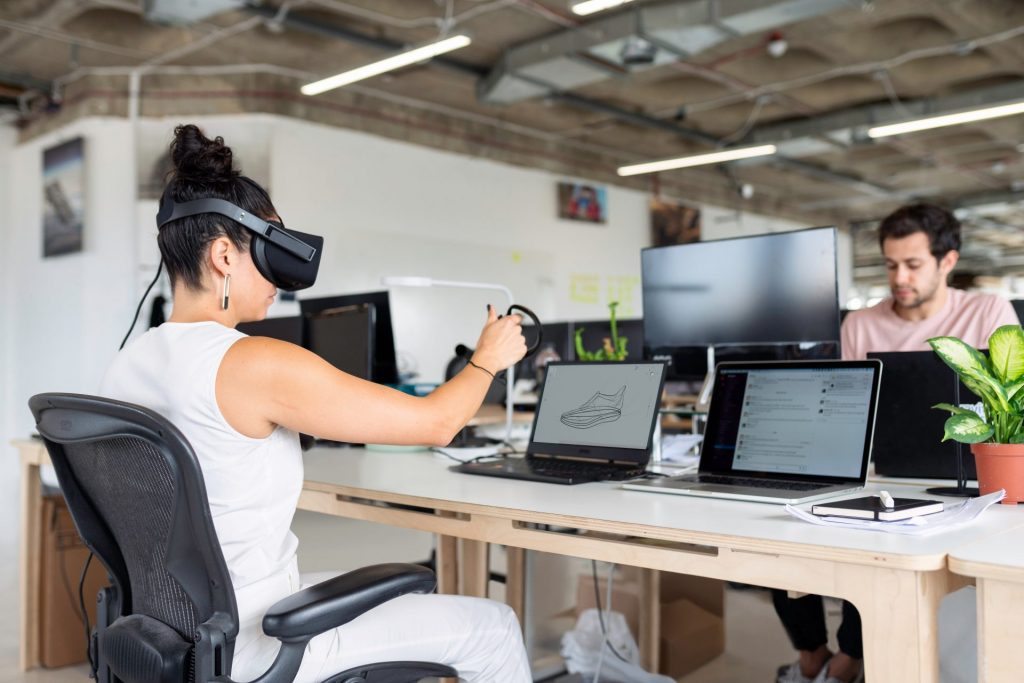
VR headsets allow people to immerse themselves into an alternate reality. They use a combination of computer graphics and sensors to provide a realistic experience. These devices are becoming increasingly affordable and accessible.
We hope that this article has given you some insights into the future of web design. The reality is that no one knows precisely what will happen in 2023, but it’s fun to speculate! If we had to guess, we’d say there will be a lot more emphasis on simplicity and ease of use, with less focus on flashy effects. This is good news for both businesses and users.